
Areas I work with
Your relationship with yourself
How we feel about ourselves shapes everything. The choices we make, the relationships we form, and the way we move through the world. If that inner relationship is marked by criticism, doubt, or a sense of not being enough, therapy can offer a space to begin to challenge and change it.
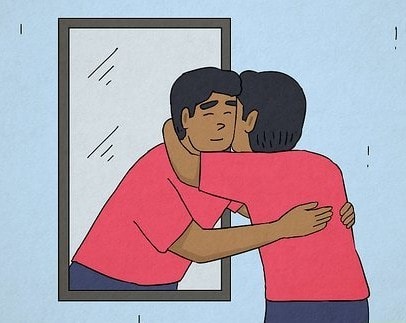
What does 'relationship with yourself' mean?
We all carry an internal world, a running commentary on who we are, what we deserve, and how we measure up. For many people, that inner voice is harsh, relentless, or deeply unkind. It may have developed early in life as a way of making sense of difficult experiences, but over time it can become a significant source of suffering.
Therapy offers a space to slow down and look more closely at that inner world. Not to fix or improve yourself, but to understand yourself more fully, and to begin to relate to yourself with greater curiosity and compassion.
What I can help with
Confidence and low self-esteem
A persistent sense of not being good enough, capable enough, or worthy of good things. We can explore where these beliefs came from and begin to loosen their hold.
Self-criticism and the inner critic
Many people live with a relentless internal voice that judges, belittles, or shames them. Therapy can help you understand this part of yourself and find a different way of relating to it.
Identity and sense of self
Questions about who you are, what you value, and where you belong can feel destabilising. This might arise at points of transition, or as a longer-standing sense of not quite knowing yourself.
Shame and self-blame
Shame is one of the most painful human experiences — a feeling not just of having done something wrong, but of being fundamentally flawed. Therapy can offer a safe space to bring shame into the light and begin to release its grip.
People-pleasing and difficulty with boundaries
Consistently putting others first, struggling to say no, or feeling responsible for other people's feelings can be exhausting. These patterns often have roots in early experience and can be gently explored in therapy.
Perfectionism
When high standards tip into an inability to tolerate mistakes or imperfection, life can feel like a constant performance. Therapy can help you understand what drives perfectionism and find a more sustainable relationship with achievement.
— Leah Clements
How I work
I work in an integrative and existential way, which means I draw on a range of therapeutic approaches to work in a manner that is tailored to you. I am interested not just in symptoms or behaviours, but in the whole person — your history, your relationships, your sense of meaning and identity.
Work on the relationship with self often unfolds slowly and gently. There is no pressure to arrive at particular conclusions or to feel differently by a certain point. The therapeutic relationship itself — a space of consistent, non-judgemental attention — can be a powerful part of the process.
Ready to take the first step?
If any of this resonates, I would be glad to hear from you. You are welcome to get in touch with a brief message about what has brought you here — there is no obligation, and no pressure.